


 Recent Posts?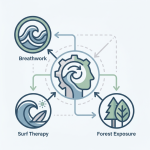
 Evergreen
Rebuilding the System That Burned Me Out
By
 Brian Chappell
&
Brian Chappell
&
 Nanobot
on June 1, 2026
Nanobot
on June 1, 2026
Rebuilding the System That Burned Me Out
Top 3 interview insights
-
A morning routine combining yoga, breathing exercises, and sunlight exposure can help create early energy and manage fatigue throughout the day.
If you can combine yoga, the sixbpm.com breathing app, and then just being in sunlight first thing when you wake up, that seems to be a pretty good combination. I did it this morning. I had a bit of a headache, didn't feel the best, and popped right out of it after about half an hour.
-
Reverse-engineering problems and creating your own solutions is central to recovery work. Not overly relying on doctors.
Just seeing a problem and not being afraid to reverse engineer it and then trying to create that yourself. I think of the new novel approach.
-
Recovery from burnout doesn't require intensive exercise—simple activities like walking, jump rope, and push-ups are helpful throughout the day.
Get up. Do a walk. Um if you can. Uh jump rope if you can. Um or push-ups seem to seem to help… it doesn't have to be anything crazy.
I don’t think burnout arrives all at once.
It shows up as a shorter fuse. A weird inability to recover after a normal workday. The kind of tired that sleep doesn’t fix. Then, if you keep ignoring it, your body starts finding louder ways to get your attention.
For me, one of those ways was cluster headaches.
I need to be careful here because I’m not a doctor, and this isn’t medical advice. Cluster headaches are serious. If you’re dealing with severe nerve issues that strike as pain in your head, or anything that feels different from your normal pattern, talk to a clinician. Don’t treat a blog post, an app, or an AI chat as a diagnosis.
But I can say this much without stretching the story: at some point, I stopped treating health like a side project and fired my doctor, and searched for a new one. Thanks Dr Alex for giving me wisdom instead of passing me off to yet another specialist. I had to look at my own life the way I look at a broken business system.
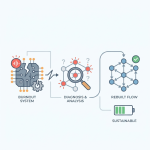
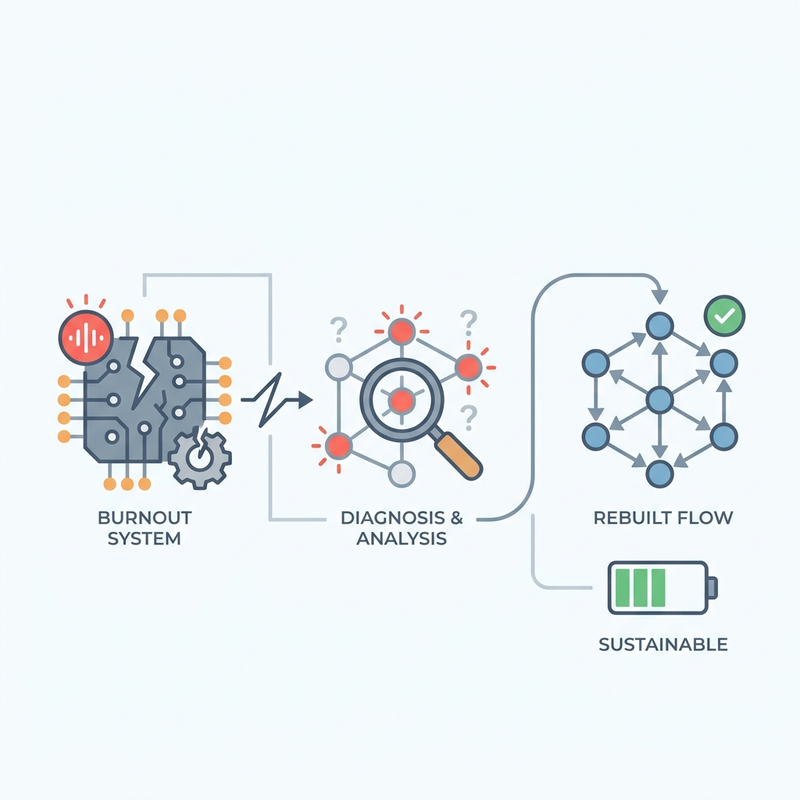
What is overloaded?
What keeps firing at the wrong time?
What is being masked instead of fixed?
Where am I asking one fragile node to carry the whole network?
That framing changed things for me. I have spent 20+ years in SEO, analytics, marketing systems, audience development, and business operations. I know what happens when a system is patched for too long instead of redesigned. You can keep adding tools. You can keep adding meetings. You can keep adding heroic effort.
Eventually the system wins.
The Burnout Pattern
The first version of my career rewarded intensity.
Build the agency. Serve the clients. Track the rankings. Watch the analytics. Manage the team. Chase the next platform change. Explain Google to people who wanted certainty from a black box.
That industry trains you to stay alert. Every algorithm update matters. Every client report matters. Every lead matters. Every small signal might be the one that explains the whole pattern.
That can be useful for business. It is brutal for a nervous system.
Fast forward to the AI shift, and the same pattern showed up again. New tools. New models. New workflows. New opportunities. The difference this time is that I had already paid the tax on running too hot for too long.
I didn’t want to use AI to make the same burnout machine faster.
I wanted to use it to rebuild the machine.
Enter: SixBPM
SixBPM.com is a small, free progressive web app built around a simple idea: breathe at six breaths per minute.
That’s it. It will adapt to your body based on the brilliance of your phones accelerometer.
Not a supplement funnel. Not a course. Not a biohacking dashboard with 47 knobs that will eventually get sold to Peloton. A free PWA that helps you slow your breathing down and practice a rhythm many people use for relaxation, routine, and nervous-system regulation.
For me, that matters because the most useful health tools are often the ones you can actually use when you’re not feeling great.
When you’re in a good place, complexity feels powerful. When you’re in a bad place, complexity becomes another tax.
So I used AI the way I wish more people would use it: not to replace judgment, not to pretend a chatbot is a doctor, and not to turn personal symptoms into fake certainty. I used it to help reason through patterns, organize what I was learning, simplify the tool, and turn a repeatable practice into something I could share.
SixBPM is not a claim that breathing treats or cures cluster headaches, it was able to reshape the rebound headaches I was left with after figuring out to deal with the actual clusters.
It is a proof point that some parts of the health stack are still underbuilt. Breathing, sleep, food, stress, light, movement, attention, environment. The boring levers that have no business backing, no one to make a buck off of.
The ones that don’t usually get venture-scale storytelling because they don’t require a proprietary pill bottle.
AI as a Health Partner
The dumb version of AI health is asking a model to diagnose you and then treating the answer like scripture.
Don’t do that.
The useful version is more practical.
Use AI to organize your notes before a doctor visit. Use it to compare your own habits against what you say you value. Use it to turn a breathing routine into a usable timer. Use it to summarize sleep research, then go verify the sources. Use it to notice whether late caffeine, bad light, skipped meals, and stress spikes tend to travel together.
In my case, AI helped me move from vague intention to repeatable practice as I reverse engineered a device whos patent was now publicly available.
That is where these tools shine. They reduce the activation energy between “I should do something” and “I did the thing today.”
SixBPM is one small example. The larger point is that AI gives individuals the ability to build tiny tools around their own lives.
That used to require a team, a budget, and a product roadmap. Now it can start as a conversation, a prototype, and a weekend of iteration.
ConsultDex and the Anti-Burnout Skill Stack
This is also why ConsultDex matters to me.
AI is going to create a weird split in the labor market. Some people will use it to take on more work than any sane person should carry. Others will use it to eliminate drudgery, increase leverage, and get back time and attention.
Same tools. Different operating philosophy.
ConsultDex is where I want more people to learn the second path.
Not “AI will do your job.”
More like: learn how to make agents handle repetitive work, learn how to document your processes, learn how to build workflows you can actually trust, and learn how to become the person in the room who understands the system. We have a whole section dedicated to mental health and I plan on sharing more of my personal story there.
That is an anti-burnout skill, way more valuable than what you do at work. This can impact you, your family and your friends.
If you can use AI to reduce chaos instead of multiply it, you get leverage without handing your nervous system over to the machine. You become more valuable because you can see the work, structure the work, and decide what should be automated versus what still needs human judgment.
That is the future I care about.
Not AI as a slot machine for content. Not AI as a way to squeeze three more hours out of an exhausted person just because your boss is trying to exploit you like a cog in the wheel, go find a new boss.
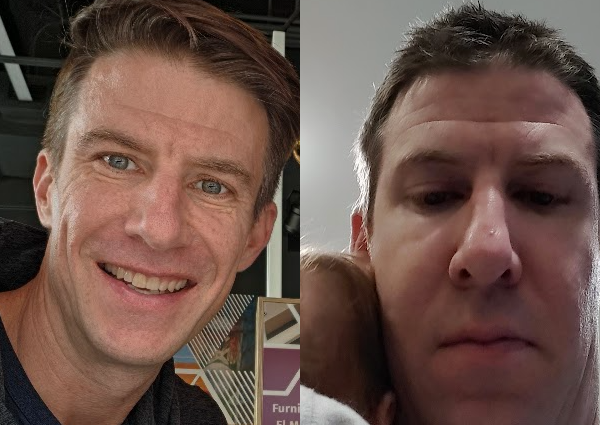
By the way I am happy to report that I am 5x the man I was just 3 years ago and turned the lemons I was dealt into a lemonade factory! Today I am a leader companies wish they could dream of hiring with second to none experience a resolve typically found in prize worthy fighters that I equate to using food as medicine and other types of therapy I wont get into here.
Who do you think is happier, more energetic and healthier? My family gets the best me and I now manage a health ailment that folks don’t have answers for. Lets Go!
Recent Posts?